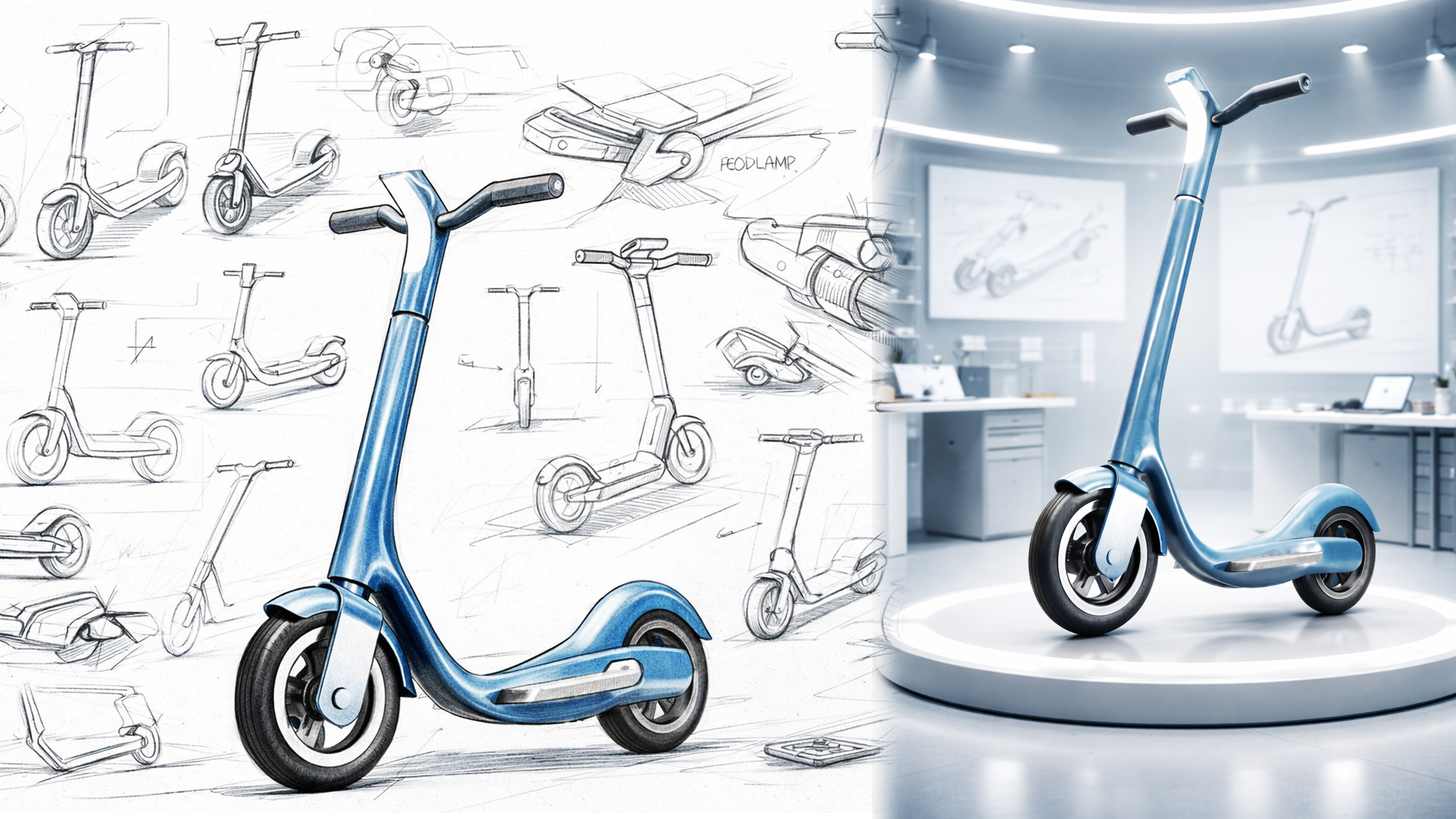
Product design and visualization are changing but not in the way buzzwords often suggest. The real shift isn’t about flashy technology. It’s about how clearly products are understood before decisions are made.
As products become more complex and teams more distributed, visualization is moving from being a presentation asset to a working tool.
From Final Renders to Working Visuals
Earlier, visualization was mostly about the final stage:
- Marketing renders
- Launch visuals
- Presentation images
Today, visualization is increasingly used much earlier:
- During concept reviews
- While comparing variants
- In technical discussions
- Before approvals are locked
The focus is shifting from “how good it looks” to “how clearly it explains”.
Interactive Over Static
Static images and PDFs still have value, but they don’t adapt to questions.
Interactive visualization allows users to:
- Rotate and inspect products freely
- View internal structure and profiles
- Switch between variants
- Understand relationships between parts
This trend is pushing visualization closer to decision-making, not just communication.
Web-Based Platforms Are Becoming the Default
One clear direction is the move toward browser based visualization.Why?
- No software installation
- Easy access during meetings and site visits
- Works across devices
- Faster sharing with stakeholders
Web-based 3D and AR experiences are becoming more practical than heavy desktop tools or custom apps especially for product catalogs and demos.
Real-Scale Understanding Is Gaining Importance
Another key trend is the need to understand products at real scale.
Seeing dimensions on a drawing is one thing.
Seeing a product at scale in your own space is another.
This is especially valuable for:
- Architectural components
- Industrial equipment
- Modular systems
- Large or spatially sensitive products
Visualization is no longer just about form it’s about context.
Visualization Is Supporting Engineering, Not Replacing It
An important shift is how visualization is positioned.
Modern visualization does not aim to replace:
- Engineering drawings
- CAD models
- Manufacturing documentation
Instead, it supports them by:
- Reducing misinterpretation
- Helping non-technical stakeholders understand intent
- Creating better context before detailed review
This makes downstream processes smoother.
Fewer Tools, Better Flow
Another emerging trend is simplification.
Instead of:
- One tool for design
- Another for presentation
- Another for demos
Teams are moving toward single, flexible visualization systems that adapt to different stages desktop review, mobile inspection, and real-world viewing.
This reduces friction and saves time.
What This Means for Product Teams
The future of product design and visualization is not about adopting every new technology. It’s about choosing tools that:
- Improve understanding
- Reduce explanation effort
- Support faster, more confident decisions
Visualization is becoming a shared language across design, engineering, sales, and management.
Final Thought
The future isn’t about making products look more impressive.
It’s about making them easier to understand.
And the teams that focus on clarity not complexity will move faster.
Looking Ahead
If you’re exploring ways to improve how your products are communicated and understood, web-based 3D and AR visualization can play a practical role especially early in the decision process.