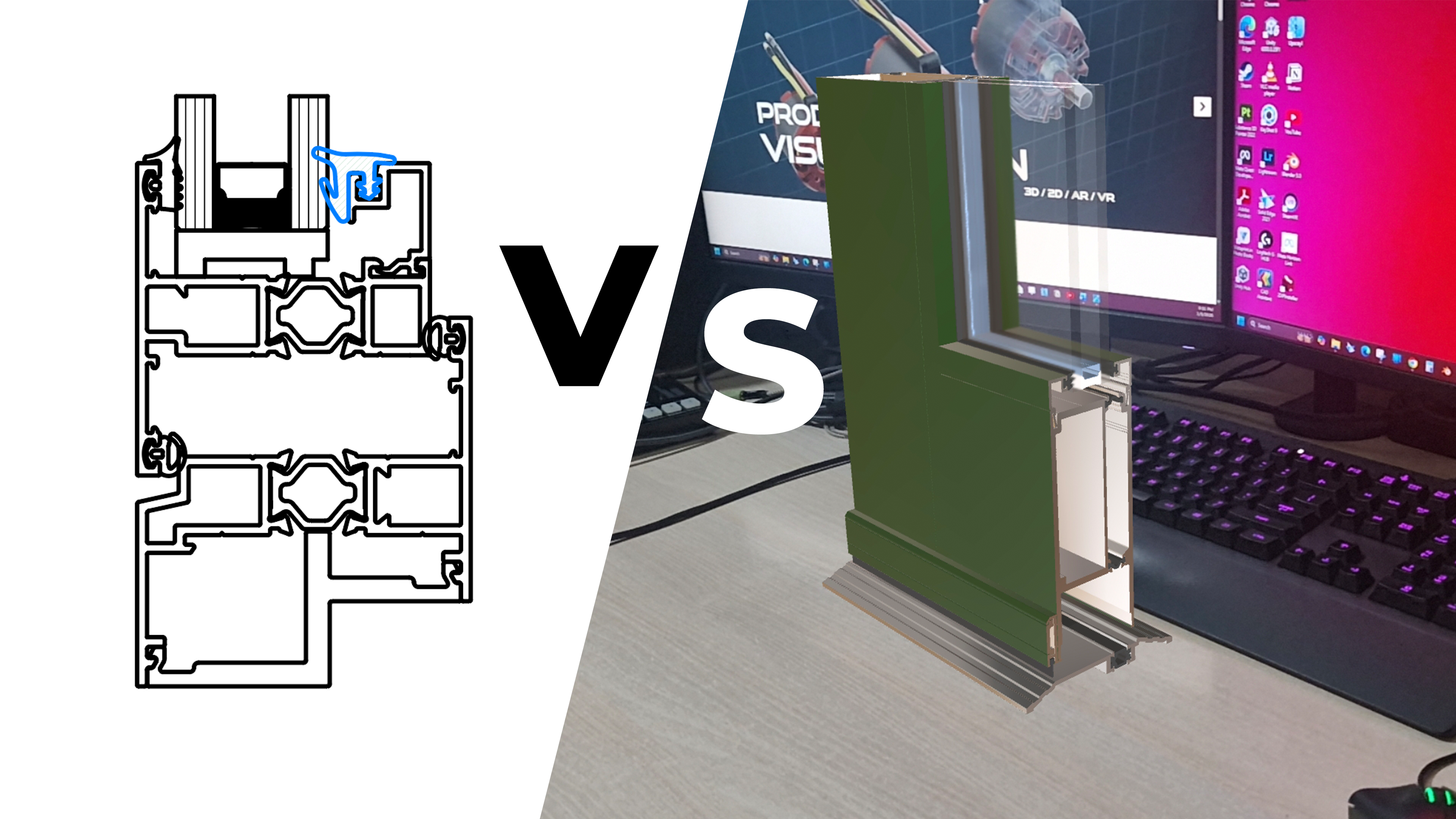
For decades, products have been explained using drawings, PDFs, images, and verbal walkthroughs. This approach still works but it often depends heavily on interpretation.
As products become more complex and teams more cross-functional, how we communicate products matters just as much as how we design them. This is where the shift from traditional product communication to interactive product understanding begins.
Traditional Product Communication
Traditional product communication relies on documents and explanations to convey intent.
Common tools include:
- Engineering drawings
- PDFs and brochures
- Static renders and images
- Slides and verbal explanations
These tools are essential and widely used. They define specifications, show intent, and support manufacturing and documentation.
But they also require the viewer to mentally translate information into understanding.
Where Traditional Communication Slows Things Down
In practice, traditional communication often leads to:
- Repeated explanations during meetings
- Different interpretations by different stakeholders
- Difficulty understanding scale and proportions
- Slower approvals, especially in early discussions
This becomes more noticeable when:
- Products have multiple variants
- Internal geometry or profiles matter
- The audience includes non-technical decision-makers
- Discussions happen outside the engineering team
The information is correct but understanding takes effort.
What Interactive Product Understanding Changes
Interactive product understanding focuses on showing the product instead of explaining it.
Using web-based 3D and AR experiences, users can:
- Explore the product in 3D
- Inspect assemblies or cross-sections visually
- Switch between product variants
- View products at real scale in their own environment
This reduces the need for interpretation and explanation.
The product starts to explain itself.
A Simple Shift in Approach
Instead of saying:
“Let me explain how this works…”
The experience allows:
“Here’s the product take a look.”
This small shift has a big impact on clarity and confidence.
Traditional Communication vs Interactive Understanding
| PDFs and drawings | Web-based 3D models |
| Static views | Interactive inspection |
| Verbal explanation | Visual clarity |
| Abstract scale | Real-world scale |
| Interpretation required | Immediate understanding |
Both approaches have value but they serve different purposes.
Where Interactive Understanding Works Best
Early Design Discussions
Helps align everyone before details are locked.
Sales and Technical Presentations
Reduces explanation time and improves engagement.
Product Selection and Comparison
Makes variants and profiles easier to evaluate.
What This Does Not Replace
Interactive product understanding does not replace:
- Engineering drawings
- Manufacturing documentation
- Tolerance and specification control
Instead, it supports them by creating better context and shared understanding before detailed decisions are made.
Why This Matters
When people understand products faster:
- Meetings become more focused
- Fewer assumptions are made
- Revisions are reduced
- Decisions happen with more confidence
Good communication doesn’t change the product it changes how quickly people trust it.
Final Thought
Traditional product communication explains products.
Interactive product understanding lets people experience them.
In many cases, that difference is what moves a decision forward.
Thinking About Interactive Product Understanding?
If your products are correct on paper but hard to explain in conversation, a web-based 3D and AR experience can make communication clearer and decisions faster.
Related service: Web-Based AR Product Catalog → View Case Study