Visualization has always been part of product development. Sketches, drawings, and renders help teams express ideas and communicate intent. What has changed is how central visualization has become to decision-making.
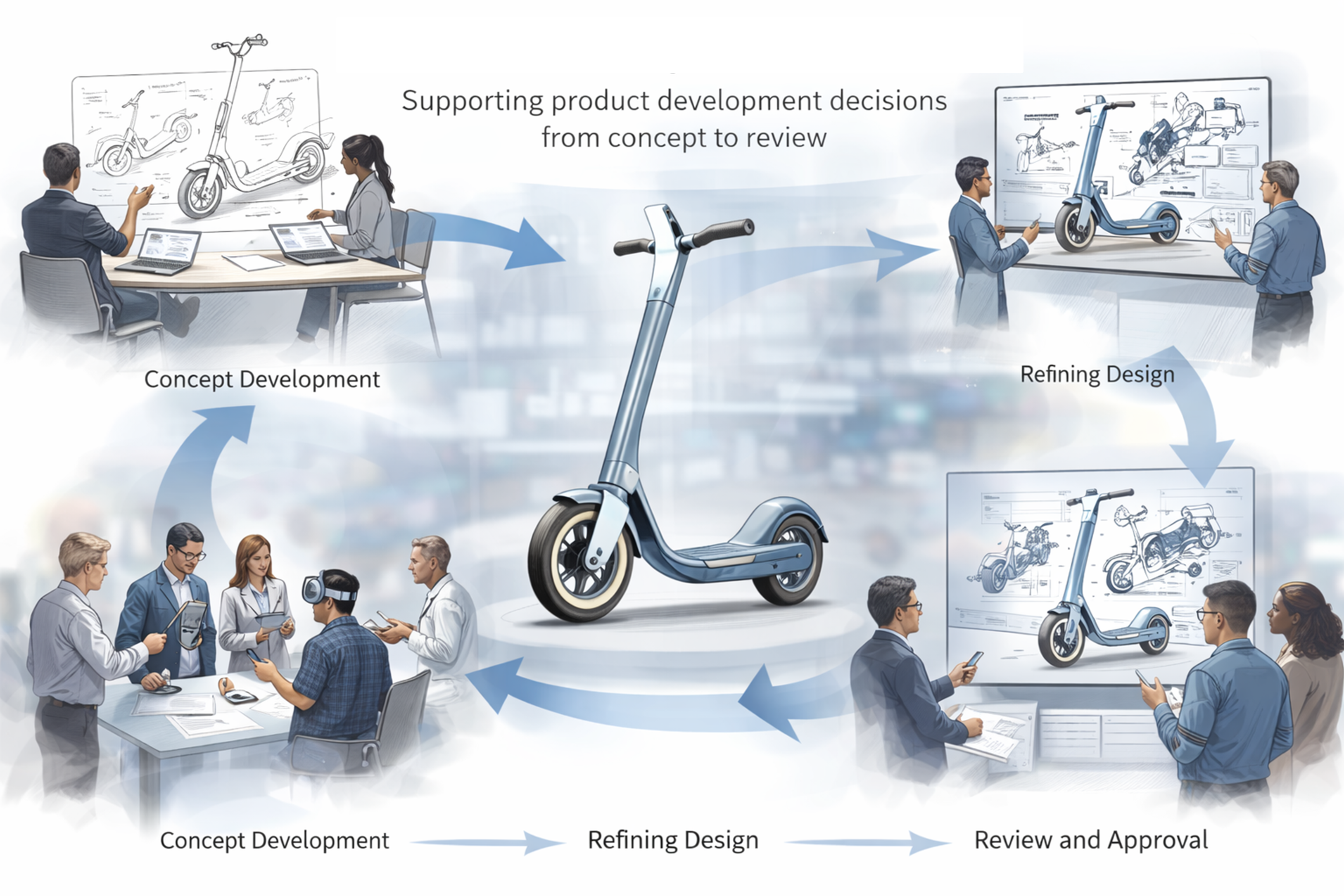
Today, visualization is no longer just about showing a finished idea. It plays an active role throughout the product development process from early concepts to final approvals.
Visualization Beyond Presentation
Traditionally, visualization was used at specific points:
- Concept sketches for direction
- Rendered images for presentations
- Marketing visuals near launch
While these are still important, visualization is now used between these stages, where most decisions are actually made.
It helps teams think, question, and validate ideas before they are locked in.
Early-Stage Clarity
In the early stages of development, ideas are fluid. Decisions made here have the biggest impact, yet information is often incomplete.
Visualization helps by:
- Making abstract ideas more concrete
- Allowing teams to see proportions and relationships
- Highlighting potential issues early
- Creating a shared reference point
At this stage, clarity matters more than polish.
Supporting Design and Engineering Discussions
As products evolve, discussions become more detailed. Visualization supports these conversations by reducing interpretation.
Instead of explaining what a drawing represents, teams can:
- Inspect the product in 3D
- Review assemblies and interfaces
- Discuss changes with visual context
- Align faster across disciplines
This improves the quality of discussions and reduces misunderstandings.
Visualization as a Review Tool
Product reviews often involve people with different backgrounds design, engineering, manufacturing, sales, and management.
Visualization helps by:
- Making designs accessible to non-technical stakeholders
- Allowing everyone to see the same thing
- Reducing assumptions during reviews
- Supporting clearer feedback
When reviews are visual, they are usually more focused and productive.
Reducing Rework Through Better Understanding
Many downstream issues originate from early misunderstandings.
When visualization is used effectively:
- Potential problems are spotted earlier
- Design changes happen before they become expensive
- Documentation is reviewed with better context
- Confidence increases before moving forward
The result is fewer revisions and smoother progress.
From Static to Interactive
Another shift is the move from static visuals to interactive ones.
Interactive visualization allows teams to:
- Explore products from different angles
- Focus on specific areas of interest
- Compare variants
- Understand spatial relationships
This interactivity makes visualization more useful as a working tool, not just a communication asset.
Visualization Does Not Replace Engineering
It’s important to be clear about what visualization does not do.
Visualization does not replace:
- Engineering drawings
- CAD models
- Analysis and validation
Instead, it supports these processes by improving understanding and alignment before detailed decisions are finalized.
Final Thought
The role of visualization in product development has expanded. It now sits at the center of how teams explore ideas, communicate intent, and make decisions.
When used well, visualization doesn’t just show the product—it helps shape it.
Looking to Improve Product Understanding?
If your teams rely heavily on explanations, reviews, and iterations, clearer 3D and interactive visualization can support better decisions throughout product development.